


Weekly Brief 13-17/06/2024
- Smriti IASxp

- Jun 17, 2024
- 8 min read
India's textile exports saw a 9.59% increase in May this year, even though major markets faced challenging economic conditions: India's textile exports increased by 9.59 percent in May this year compared to the previous year, despite challenging economic conditions in major markets such as the European Union (EU), the US, and West Asian countries.
According to a report by the Confederation of Indian Textile Industry (CITI), India's apparel exports also grew by 9.84 percent during the same period. Overall, the combined exports of textiles and apparel in May 2024 saw a growth of 9.70 percent compared to May last year.
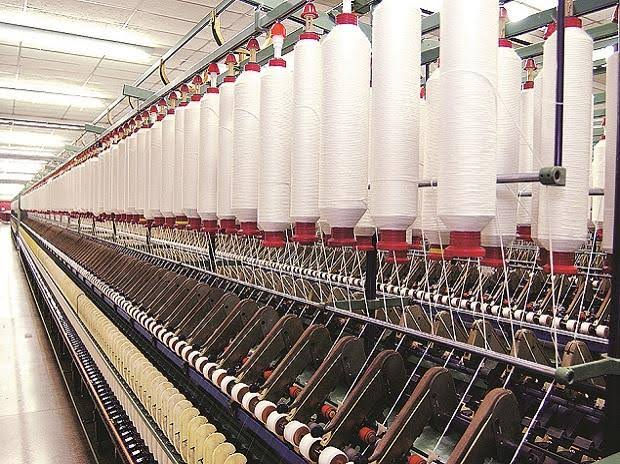
The country's total exports for May 2024 rose to 68.29 billion US dollars, marking a significant year-on-year increase of 10.2 percent, as reported by the Commerce Ministry on June 14. Between April and May this year, India's textile exports grew by 6.04 percent over the previous year, while apparel exports saw a growth of 4.46 percent in the same period.
2. Extraordinary Revenue Acceleration (ERA) Loans for Ukraine: The Extraordinary Revenue Acceleration (ERA) Loans for Ukraine is a recent initiative by the G7 (Group of Seven) to provide significant financial assistance to Ukraine.
Here's a breakdown of the key points:
Amount: The G7 aims to deliver roughly $50 billion to Ukraine by the end of 2024.
Purpose: These are loans intended to help Ukraine address urgent needs arising from the ongoing war and bolster its resilience.
Repayment: The loans will be serviced and repaid using future revenue generated from frozen Russian assets held by G7 countries and other participating jurisdictions.
Announcement: The initiative was announced during the G7 summit in Apulia, Italy, in June 2024.
What is G7
The G7, or Group of Seven, is an intergovernmental political and economic forum consisting of Canada, France, Germany, Italy, Japan, the United Kingdom and the United States. The European Union also participates as a "non-enumerated member".
The G7 deals with issues of global importance, including:
Global economic governance: The G7 coordinates economic policies among member states to promote global economic stability and growth.
International security: The G7 addresses global security threats, such as terrorism, nuclear proliferation, and cyberattacks.
Development: The G7 works to promote sustainable development and reduce poverty in developing countries.
Climate change: The G7 is a major player in the fight against climate change, and is working to reduce greenhouse gas emissions and promote renewable energy.
Health: The G7 addresses global health challenges, such as pandemics and infectious diseases.
The agenda for the most recent G7 summit, held in Apulia, Italy, in June 2024, focused on several key issues:
Russia's war in Ukraine: The G7 condemned Russia's aggression and pledged continued support for Ukraine, including the aforementioned Extraordinary Revenue Acceleration (ERA) Loans.
Global economic recovery: The G7 discussed strategies to address global inflation and supply chain disruptions.
Climate change: The G7 reaffirmed its commitment to tackling climate change and achieving net-zero emissions by 2050.
Food security: The G7 pledged to work together to address the global food security crisis, exacerbated by the war in Ukraine.
Africa: The G7 discussed ways to support development and investment in Africa.
The G7 is a significant forum for addressing global challenges. However, it has also been criticized for its lack of inclusivity, as it only represents a small number of wealthy democracies.
3.Gig Economy : Recently, gig workers have reported incidents of heat stroke and fainting, with no health-related support from the companies they work for.
The gig economy, also known as the freelance or on-demand economy, is characterized by temporary, flexible jobs and is becoming increasingly significant in India. It is driven by companies that prefer hiring short-term contractors, consultants, and freelancers instead of full-time employees.
This sector involves individual workers performing tasks for clients through platforms on a task-by-task basis, fueled by the widespread adoption of smartphones, digital technologies, and the country's demographic dividend. Gig work can be broadly classified into platform-based and non-platform-based work.
4. India Set To Launch Deep Sea Mission, Aims To Enhance Ocean Sciences & Blue Economy:
The vast expanse of India's seas is a valuable asset, offering numerous benefits due to the country's extensive coastline of over 7,500 km.
This long coastline supports vibrant trade through its major ports and significantly contributes to India's blue economy, which includes fishing and other marine activities. Beyond these, the depths of the seas hold even greater potential. India's Exclusive Economic Zone covers 2.2 million square kilometers, much of which remains "unexplored and unutilized." Exploring these depths could play a crucial role in addressing climate change challenges.

The Prime Minister's Science, Technology, and Innovation Advisory Council's (PM-STIAC) ‘Deep Ocean Exploration’ aims to scientifically investigate the deep oceans to enhance our understanding of this blue frontier. This mission will provide data to address issues resulting from long-term oceanic changes due to climate change.
Key focus areas include
developing technologies for deep-sea exploration and the sustainable exploitation of both living (biodiversity) and non-living (minerals) resources;
creating underwater vehicles and robotics; establishing ocean climate change advisory services; innovating sustainable methods for marine bio-resource utilization;
developing offshore desalination techniques; and generating renewable energy.
India has joined countries like China, France, Germany, Japan, South Korea, and Russia in undertaking significant deep ocean missions. In 2019, the Indian government launched an ₹8,000-crore initiative to explore ocean depths with multifaceted goals, including the extraction of metals and minerals.
Additionally, India has been granted a 75,000 sq. km. site in the Central Indian Ocean Basin (CIOB) by the UN International Seabed Authority for the exploitation of polymetallic nodules (PMN). Utilizing just 10% of the PMN reserves in this area could potentially meet India's energy needs for the next 100 years.
5.Nagastra: The Indian Army has received its first indigenously-made suicide drones. These unmanned aerial vehicles (UAVs), known as Nagastra-1, are manufactured by Solar Industries Nagpur
6. Global Gender Gap Report 2024: published annually by the World Economic Forum (WEF).
This report analyzes the disparity between men and women across four key dimensions:
Economic Participation and Opportunity
Educational Attainment
Health and Survival
Political Empowerment
For each country, the report assigns a score reflecting progress towards gender parity. It's a valuable tool for tracking a nation's efforts in closing the gender gap over time.
Overall Findings:
The global gender gap score in 2024 stands at 68.5%, indicating that 31.5% of the gap remains. Progress has been minimal, with only a 0.1% improvement from 2023.
At the current pace, achieving full gender parity globally will take 134 years, well beyond the 2030 Sustainable Development Goals (SDG) target.
The most significant gender gaps persist in Political Empowerment (77.5% unaddressed) and Economic Participation & Opportunity (39.5% unaddressed).
Top-Ranking Countries:
Iceland (93.5%) continues to be the world's most gender-equal society for the 15th consecutive year, followed by Finland, Norway, New Zealand, and Sweden.
Seven out of the top ten countries are in Europe (Iceland, Finland, Norway, Sweden, Germany, Ireland, Spain).
Other regions in the top ten include Eastern Asia and the Pacific (New Zealand at 4th), Latin America and the Caribbean (Nicaragua at 6th), and Sub-Saharan Africa (Namibia at 8th).
Spain and Ireland made significant advances into the top ten in 2024, climbing 8 and 2 positions, respectively, compared to 2023.
Regional Performance:
Europe leads with 75% of its gender gap closed, followed by Northern America (74.8%) and Latin America & the Caribbean (74.2%).
The Middle East and North Africa region ranks lowest, with 61.7% of its gender gap closed.
Southern Asia ranks 7th out of 8 regions, with a gender parity score of just 63.7%.
Economic & Employment Gaps:
Women represent 42% of the global workforce and only 31.7% of senior leadership roles, trailing behind men in nearly every industry.
There is a 21.5% drop in the "leadership pipeline" for women from entry-level to managerial positions globally.
Women's hiring into leadership roles has declined in 2023-24 due to worsening economic conditions.
How has India Fared in the Gender Gap Report 2024?
India’s Rank:
India has slipped to 129th in 2024 from 127th in 2023 out of 146 countries.
Within South Asia, India ranks fifth, behind Bangladesh, Nepal, Sri Lanka, and Bhutan, with Pakistan ranking last in the region.
Economic Parity:
India is among the countries with the lowest economic parity levels, similar to Bangladesh, Sudan, Iran, Pakistan, and Morocco, with less than 30% gender parity in estimated earned income.
Educational Attainment:
India shows the best gender parity in secondary education enrollment.
Political Empowerment:
India ranks 65th globally in the political empowerment of women and 10th in parity of years with female/male heads of state over the past 50 years.
However, women's representation in federal ministerial positions (6.9%) and Parliament (17.2%) remains low.
Gender Gap Closure:
India has closed 64.1% of its gender gap as of 2024. The decline in ranking from 127th to 129th is primarily due to small drops in 'Educational Attainment' and 'Political Empowerment,' though there were slight improvements in 'Economic Participation' and 'Opportunity' scores.
7.JIMEX Exercise-24 : Indian Navy's indigenous Stealth Frigate INS Shivalik arrived at Yokosuka, Japan to participate in the bilateral Japan – India Maritime Exercise 2024 (JIMEX 24).
This is the eighth edition of JIMEX, since its inception in 2012.
India and Japan
8 . Digital Health Incentive Scheme : The Digital Health Incentive Scheme (DHIS) is an initiative launched by the National Health Authority (NHA) in India to promote the adoption of the Ayushman Bharat Digital Mission (ABDM).
Here's a breakdown of DHIS:
Goal: Encourage healthcare facilities and digital health solution providers to participate in ABDM by creating a digital health ecosystem
Benefits:
For Individuals: Enables secure storage and access to personal health records through Ayushman Bharat Health Account (ABHA)
For Healthcare Facilities (Hospitals, Labs etc): Provides financial incentives of up to Rs. 4 crores for creating and linking digital health records to ABHA. They can earn Rs. 20 for each digital record created above a baseline of 100 transactions a month
. The scheme is applicable to both government and private facilities

For Digital Health Solution Providers: Incentivizes creation of affordable and user-friendly digital health solutions like Hospital Management Information Systems (HMIS) and Laboratory Management Information Systems (LMIS)
Current Status: The scheme was launched in January 2023 and has been extended till December 31st, 2023 [National Health Authority
Overall, DHIS aims to:
Increase digitalization in the healthcare sector.
Improve access to and sharing of personal health information.
Empower patients with better control over their health data.
9. Digital Agri Mission : The Digital Agri Mission (DAM) is a mission launched by the Government of India in 2021 with the aim of transforming the agriculture sector through the use of modern technologies. Here's a breakdown of the key details about DAM:
Goal:
Encourage the adoption of cutting-edge technologies like Artificial Intelligence (AI), Blockchain, remote sensing, drones, and robots in agriculture
Improve farm efficiency and productivity.
Increase farmer income.
Implementation:
Though planned for a national rollout in 2021-22, it faced delays due to COVID-19.
The Ministry of Agriculture and Farmers Welfare is currently finalizing the framework for 'AgriStack' - a digital infrastructure to house these technological solutions [PIB pib.gov.in].
Pilot projects are underway in several states like Uttar Pradesh, Maharashtra, Gujarat, Punjab, and Tamil Nadu
Expected Benefits:
Nationwide Farmer Registry: Create a centralized database of farmers for better targeting of services and benefits.
Crop Sown Registry: Maintain a record of crops planted by farmers, aiding in crop production estimation and planning
Improved Market Access: Provide farmers with access to real-time market information and e-platforms for selling their produce
Financial Inclusion: Facilitate easier access to farm loans, insurance schemes, and other financial services through digital platforms
Precision Farming: Enable data-driven decisions on resource usage (water, fertilizer, pesticides) leading to higher yields and reduced costs
Overall Impact: The Digital Agri Mission has the potential to revolutionize Indian agriculture by empowering farmers, streamlining processes, and increasing overall efficiency and profitability of the sector.
Thanks For Visiting!!
Source: Indian Express and The HINDU
Comments