


Weekly Affairs 17-23/02/2025
- Smriti IASxp

- Feb 23, 2025
- 12 min read
1 .Fish production doubles in last 10 years:(General Studies-III (250 marks)Technology, Economic Development, Biodiversity, Environment, Security, and Disaster Management)
Ministry of FisheriesIndia has emerged as the second-largest fish-producing country globally, contributing approximately 8% to global fish production.
Over the past two decades, the fisheries sector has undergone significant growth and transformation, driven by technological advancements, policy reforms, and strategic government initiatives

Highlights of India’s Fisheries Sector
Production Growth:
Fish production in India increased from 63.99 lakh tonnes in 2003-04 to 184.02 lakh tonnes in 2023-24, marking a growth of 88.23 lakh tonnes over the last decade (2014-24)
Inland and aquaculture fish production saw a remarkable rise of 77.71 lakh tonnes from 2014-24, compared to 26.78 lakh tonnes in the previous decade (2004-14)
Export Performance:
India exported 17,81,602 metric tonnes (MT) of seafood worth Rs 60,523.89 crore in 2023-24, a significant jump from Rs 609.95 crore in 2003-04
The Marine Products Export Development Authority (MPEDA) reported that India’s seafood exports have become a key contributor to the economy, with a focus on value-added products like frozen fish paste (surimi) and fish hydrolysate
Government Initiatives:
Blue Revolution Scheme: Launched in 2015-16 with a central outlay of Rs 3,000 crore, this scheme aimed to increase fisheries production and productivity, both inland and marine
Pradhan Mantri Matsya Sampada Yojana (PMMSY): Introduced in 2020 with an investment of Rs 20,050 crore, PMMSY focuses on sustainable development, infrastructure creation, and socio-economic welfare of fishers and fish farmers
Union Budget 2025-26: The government proposed the highest-ever budgetary support of Rs 2,703.67 crore for the fisheries sector, emphasizing sustainable marine resource utilization, deep-sea fishing, and modern aquaculture techniques
Focus on Marine Fisheries:
The budget introduced a framework for sustainable harnessing of fisheries in India’s Exclusive Economic Zone (EEZ) and high seas, with special attention to the Andaman & Nicobar and Lakshadweep Islands
Measures include promoting tuna clusters, seaweed cultivation, and ornamental fish farming, alongside streamlining licensing processes for deep-sea fishing vessels
Financial Inclusion and Support:
The Kisan Credit Card (KCC) lending limit was increased from Rs 3 lakh to Rs 5 lakh, ensuring better access to credit for fishers, processors, and other stakeholders
Customs duties on key inputs like frozen fish paste and fish hydrolysate were reduced to 5%, enhancing India’s competitiveness in the global seafood market
Inland Fisheries Development:
Inland fisheries, contributing over 75% of total fish production, have seen significant growth, with production rising from 61 lakh tonnes in 2013-14 to 139 lakh tonnes in 2023-24
Initiatives like reservoir cage farming, biofloc technology, and the conversion of saline-alkaline areas into productive aquaculture zones have boosted productivity

2 .The Munich Security Conference (MSC) is an annual conference on international security policy held in Munich, Germany. It is the world's largest gathering of its kind, bringing together heads of state, government officials, military leaders, and experts from around the globe to discuss pressing security challenges.

Key features of the Munich Security Conference:High-level participation:
(GS Paper II: Governance, Constitution, Polity, Social Justice and International Relations)
The MSC attracts a diverse range of high-profile attendees, including presidents, prime ministers, defense ministers, foreign ministers, and leaders of international organizations.
Informal dialogue: The conference provides a platform for open and informal discussions on a wide range of security issues, fostering dialogue and exchange of ideas among participants
Focus on current challenges: The MSC addresses the most pressing security concerns facing the world, including conflicts, terrorism, cyber threats, climate change, and global health crises.
"Munich Rule": The conference operates under the "Munich Rule," which emphasizes engagement and interaction among participants, encouraging them to listen to each other and avoid lecturing or ignoring opposing viewpoints.
Marketplace of ideas: The MSC serves as a "marketplace of ideas," where participants can propose solutions, initiatives, and strategies to address global security challenges.
Independent platform: The conference is organized privately and is not an official government event, allowing for more candid and open discussions.
History and significance:
Founded in 1963, the MSC has evolved into the most important independent forum for security policy decision-makers worldwide.
It has played a crucial role in fostering dialogue and cooperation on international security issues for over six decades.
The conference has witnessed numerous significant moments in international relations, including discussions on arms control, the Cold War, and the post-Cold War security landscape.
The MSC in 2025:
The 61st Munich Security Conference will take place from February 14 to 16, 2025.
It will likely focus on critical issues such as:
The ongoing war in Ukraine and its global implications
Rising tensions in the Asia-Pacific region
The future of the international order
Climate change and its impact on security
Technological advancements and their security implications
The MSC 2025 will provide a crucial opportunity for leaders and experts to engage in discussions and seek solutions to the complex security challenges facing the world today.
3 .Gulf food 2025 (General Studies-III (250 marks)Technology, Economic Development, Biodiversity, Environment, Security, and Disaster Management) is scheduled to take place from February 17th to 21st at the Dubai World Trade Centre. It's one of the world's largest annual food and beverage exhibitions, featuring thousands of exhibitors from around the globe.
this marks the 29th edition of the event, which has been running since 1987.
4 .PM-AASHA:(GS Paper II: Governance, Constitution, Polity, Social Justice and International Relations)stands for Pradhan Mantri Annadata Aay Sanrakshan Abhiyan. It's a comprehensive scheme launched by the Indian government in 2018 to ensure farmers receive remunerative prices for their produce.
Objective: The core goal is to protect farmers' income by ensuring they get at least the Minimum Support Price (MSP) for their crops. This helps to stabilize agricultural markets and encourage farmers to continue production.
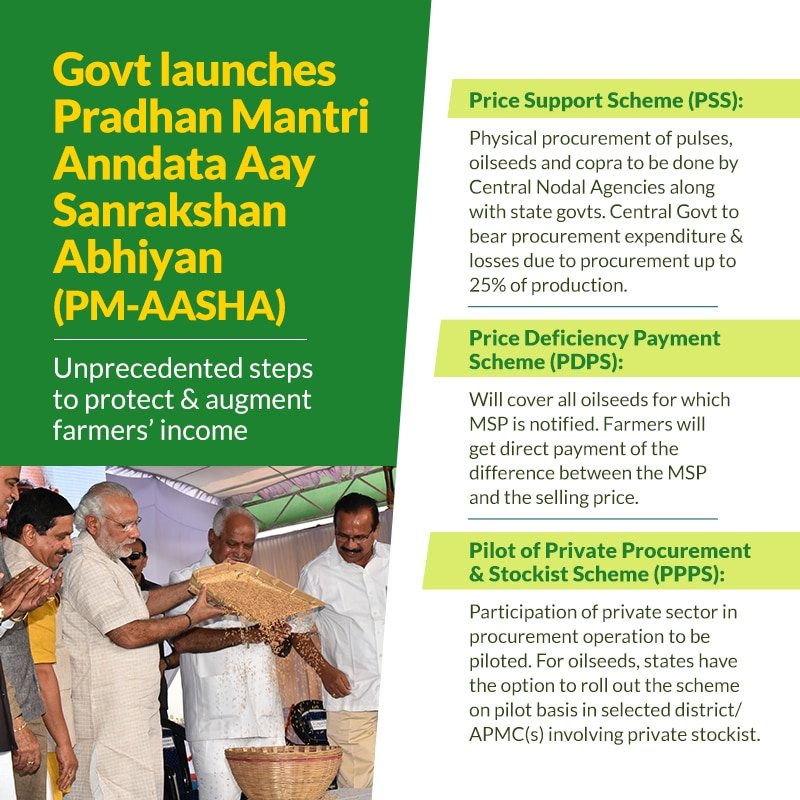
PM-AASHA is an umbrella scheme with three main components:
Price Support Scheme (PSS): Government agencies directly procure crops like pulses, oilseeds, and copra at the MSP from farmers.
Price Deficiency Payment Scheme (PDPS): Instead of physically buying the crops, the government pays farmers the difference between the MSP and the market price. This is particularly useful for perishable goods.
Private Procurement & Stockist Scheme (PPSS): This encourages private players to participate in crop procurement, further boosting market competition and ensuring better prices for farmers.
Implementation: States have the flexibility to choose which component of PM-AASHA they want to implement based on their specific needs and the crops grown in their region.
Significance: PM-AASHA is a crucial step towards addressing the challenges faced by Indian farmers, such as price fluctuations and market volatility. By ensuring a stable income, it aims to improve their livelihoods and promote sustainable agriculture.
Essentially, PM-AASHA is a safety net for farmers, designed to provide them with a fair price for their hard work and contribute to the overall growth of the agricultural sector in India.
5 .8th Indian Ocean Conference .Muscat, Oman:(GS Paper II: Governance, Constitution, Polity, Social Justice and International Relations)
started by India Foundation in 2016 at Singapore, with participation from 30 countries. In the last 8 years, the Conference has emerged as the flagship consultative forum for countries in the region over regional affairs.

The Conference endeavours to bring critical states and principal maritime partners of the region together on a common platform to deliberate upon the prospects of regional cooperation for Security and Growth for All in the Region (SAGAR).
Security and Growth for All in the Region (SAGAR) is India's vision for the Indian Ocean region. It was launched in 2015 by Prime Minister Narendra Modi.
SAGAR is a comprehensive framework that seeks to promote peace, stability, and prosperity in the Indian Ocean region through cooperation and collaboration with other countries.
8.The MSK device is a device that is used to measure the intensity of an earthquake. It is a macroseismic intensity scale that was developed in 1964 by Sergei Medvedev, Wilhelm Sponheuer, and Vit Karnik.
The MSK scale is used to measure the intensity of an earthquake based on the observed effects of the earthquake on people, buildings, and the environment.
The MSK scale has 12 levels of intensity, ranging from I (not felt) to XII (total destruction).
The intensity of an earthquake is determined by the amount of damage that is caused by the earthquake.

The MSK scale is used in many countries around the world, including India, Russia, and Israel.
9 .Mount Etna, Europe's most active volcano located in Sicily, Italy, has once again erupted.
While the exact date of this most recent activity isn't specified, it's important to remember that Etna is known for its frequent eruptions.

This volcano experiences both summit eruptions, often involving explosive activity and lava flows from its summit craters, and flank eruptions, which occur less often but can pose a greater risk to populated areas.
Etna has been particularly active in recent years, with eruptions occurring multiple times a year, showcasing a variety of activity including lava flows, ash plumes, and Strombolian activity.
Due to this frequent activity, Mount Etna is closely monitored by scientists at the Osservatorio Etneo (INGV), who track the volcano and provide warnings about potential hazards.
10 .Digital Brand Identity Manual (DBIM): The primary objective of the DBIM is to create a unified and consistent digital brand for the Government of India. By standardizing elements such as color palettes, typography, and iconography, the manual not only ensures uniformity in look and feel but also strengthens the integrity of government-hosted data.

This cohesive approach will enable government departments to present a compelling and trustworthy brand presence, both nationally and globally. The guidelines extend beyond websites to cover mobile applications and social media platforms, reinforcing a seamless user experience across all digital touchpoints.
To mark this milestone, the launch of the Digital Brand Identity Manual (DBIM) and the First CIO Conference 2025 will be held on 18th February 2025 at Taj Palace, New Delhi. The event will be graced by key stakeholders, including representatives from MeitY, NIC, MyGov, and other government ministries.
Key Components of the Initiative
The harmonisation initiative is built on the following key elements:
Digital Brand Identity Manual (DBIM): A comprehensive guide to ensure visual and functional consistency across government websites.
DBIM Toolkit: A set of tools enabling seamless adoption of DBIM.
GOV.IN CMS Platform: A standardized content management system tailored for DBIM Compliant websites and applications.
Central Content Publishing System: A streamlined mechanism for centralized content updates.
Social Media Integration: A unified approach to social media branding and digital outreach.
11 .SOUL Leadership Conclave:(GS Paper II: Governance, Constitution, Polity, Social Justice and International Relations)
an event organized by the School of Ultimate Leadership (SOUL) in India. It serves as a platform for leaders from various fields to share their experiences and insights on leadership.

The conclave aims to inspire and educate young aspiring leaders by providing them with real-life examples and actionable lessons from successful individuals.
The inaugural edition of the SOUL Leadership Conclave is set to take place in New Delhi in February 2025. It will feature prominent speakers from diverse sectors, including politics, business, sports, media, and spirituality. These speakers will share their personal leadership journeys, discussing the challenges they faced and the strategies they employed to overcome them.
The conclave is designed to be an interactive and engaging event, with opportunities for attendees to network with speakers and other participants.
It aims to foster a collaborative environment where young leaders can learn from each other and develop their own leadership skills.
12 .Bhutan PM Tshering Tobgay Arrives in India (GS Paper II: Governance, Constitution, Polity, Social Justice and International Relations)

13.G20 Summit Foreign ministers:(General Studies-III (250 marks)Technology, Economic Development, Biodiversity, Environment, Security, and Disaster Management) hosted by Minister of International Relations and Cooperation Minister Ronald Lamola takes place under South Africa’s G20 Presidency theme of Solidarity, Equality and Sustainability on 20 and 21 February 2025 at the Nasrec Expo Centre.
The G20 Foreign Ministers Meeting will over two days of plenary sessions discuss issues including current global geopolitical dynamics and reflection on South Africa’s G20 Presidency High-Level Deliverables and the Review of the G20@20,
which examines the impact of the G20 during the two decades of its existence.
G20 Summits of heads of state and government bring together leaders from the world’s largest economies to address pressing global challenges and foster economic cooperation.
Since its inception in 2008, the G20 has evolved from a crisis-management platform to a broader forum tackling issues like financial stability, climate change, sustainable development, and global health.
During its presidency, South Africa is prioritising Africa’s development and the goals outlined in the African Union Agenda 2063: The Africa We Want.
South Africa’s three priorities for the G20 Presidency focus on
14 .Echolocation (General Studies-III (250 marks)Technology, Economic Development, Biodiversity, Environment, Security, and Disaster Management) is a fascinating biological sonar system used by certain animals, most notably bats and toothed whales. These animals emit sounds, such as clicks or pulses, that travel outward into their environment. When these sounds encounter an object, they bounce back as echoes.
The animal then analyzes these returning echoes to gain a wealth of information. The time it takes for the echo to return reveals the distance to the object, while changes in the frequency of the echo provide clues about the object's size and shape.
The intensity of the echo can even indicate the texture or density of the object.
This sophisticated process allows bats to navigate and hunt in complete darkness, and enables dolphins and other toothed whales to find prey and communicate in murky waters.
While not as refined as in animals, some blind individuals have also learned to use a form of echolocation by making clicking sounds and interpreting the returning echoes to perceive their surroundings.
15 .The World Day of Social Justice is observed annually on February 20. It was established by the United Nations (UN) to promote efforts to tackle issues such as poverty, exclusion, gender inequality, unemployment, human rights, and social protections.
The day emphasizes the importance of creating a more equitable and just world for all.
History:
The UN General Assembly proclaimed February 20 as the World Day of Social Justice in 2007.
The day aligns with the principles outlined in the International Labour Organization (ILO) Declaration on Social Justice for a Fair Globalization (2008).
Social justice is essential for achieving sustainable development and peace. Inequalities and injustices often lead to social unrest, conflict, and poverty. By addressing these issues, societies can foster inclusivity, reduce disparities, and ensure that everyone has the opportunity to thrive.

This year, in 2025, the theme for World Day of Social Justice is "Strengthening a Just Transition for a Sustainable Future".
16 .100-Day TB Campaign:(General Studies-III (250 marks)Technology, Economic Development, Biodiversity, Environment, Security, and Disaster Management) is a part of the broader framework of the National TB Elimination Programme (NTEP) under the aegis of the National Health Mission (NHM), which is aligned with the National Strategic Plan (NSP) for TB Elimination 2017–2025.
The NSP focuses on reducing TB incidence, enhancing diagnostic and treatment capabilities, and addressing the socio-economic impact of the disease.
This ambitious initiative reflects the vision set by Prime Minister Narendra Modi at the 2018 End TB Summit, where he pledged to achieve a TB-free India by 2025
The National TB Elimination Programme (NTEP), formerly known as the Revised National Tuberculosis Control Programme (RNTCP), is the Indian government's initiative to combat tuberculosis (TB). It aims to eliminate TB in India by 2025, five years ahead of the global target of 2030.
Objectives:
Early diagnosis of TB patients.
Prompt treatment with quality-assured drugs and regimens.
Engagement with patients seeking care in the private sector.
Prevention strategies, including contact tracing in high-risk/vulnerable populations.
Airborne infection control.
Multi-sectoral response to address social determinants.
Strategies:
Detect-Treat-Prevent-Build (DTPB): This four-pillar strategy guides the program's activities.
Active Case Finding: Reaching out to vulnerable populations to detect TB cases early.
Improved Diagnostics: Utilizing rapid molecular tests for quick and accurate diagnosis.
Shorter Treatment Regimens: Introducing and expanding the use of shorter, more patient-friendly treatment courses.
Decentralized Services: Bringing TB services closer to communities.
Community Engagement: Involving communities in TB prevention and care through initiatives like the Pradhan Mantri TB Mukt Bharat Abhiyaan.
Addressing Co-morbidities: Focusing on the management of TB patients with conditions like diabetes, HIV, and malnutrition.
TB Preventive Treatment (TPT): Expanding access to TPT for those at risk of developing TB.
Achievements:
Significant reduction in TB incidence and mortality rates.
Increased case notifications.
Expansion of diagnostic and treatment services.
Introduction of new drugs and regimens.
Active involvement of the private sector.
Growing community participation.
Challenges:
Reaching vulnerable populations.
Addressing drug resistance.
Ensuring adherence to treatment.
Tackling stigma and discrimination.
Mobilizing resources.
, the National TB Elimination Programme is a comprehensive and ambitious initiative that has made significant strides in the fight against TB in India. With its focus on early diagnosis, effective treatment, and preventive measures, the program is well-positioned to achieve its goal of a TB-free India by 2025.
17 .India’s fruit exports expand into western markets with GI tags driving growth: (General Studies-III (250 marks)Technology, Economic Development, Biodiversity, Environment, Security, and Disaster Management)
India’s agricultural exports have reached new markets under the Modi government, with shipments of fruits entering Western countries for the first time and rice exports recording substantial growth, boosting farmers’ incomes.
A senior agriculture ministry official stated that these exports, ranging from exotic fruits to traditional staples, align with the government’s Aatmanirbhar Bharat initiative, which aims to create new opportunities for Indian farmers.
In a recent milestone, India shipped its first consignments of premium Sangola and Bhagwa pomegranates to Australia via sea. This development is expected to enable bulk exports at lower transport costs, expanding India’s fresh fruit market in Australia and strengthening its presence in global supply chains.
Indian pomegranates have already gained popularity in Western markets following the trial shipment of Bhagwa pomegranates to the United States in 2023. Maharashtra’s Solapur district accounts for nearly 50% of the country’s pomegranate exports.
Bhagwa pomegranates are a prized variety, celebrated for their impressive size, delectable sweetness, and vibrant deep red hue. Predominantly cultivated in the state of Maharashtra, India, these pomegranates are distinguished by their large, round shape and thick, glossy, saffron-colored skin.
The arils, or seed coverings, within are a rich, deep red, contributing to the fruit's overall appeal.
Known for their sweet and juicy flavor, with a subtle tang, Bhagwa pomegranates flourish in hot, dry climates with well-drained soil. Harvested primarily in the fall, they are enjoyed fresh, as well as incorporated into juices, salads, and desserts.
Beyond their delicious taste, Bhagwa pomegranates offer a healthy dose of vitamins, minerals, and antioxidants, making them a nutritious and versatile fruit.
18 .Madhya Pradesh has emerged as the state with the highest number of vultures in India(General Studies-III (250 marks)Technology, Economic Development, Biodiversity, Environment, Security, and Disaster Management), a testament to its successful conservation efforts. A recent state-level vulture census revealed a population of 12,981 vultures, marking a significant increase from previous years.
This positive trend reflects the state's commitment to wildlife preservation and the effectiveness of its habitat protection measures. Madhya Pradesh is home to seven vulture species, including four native and three migratory ones.
Thanks For Visiting!!
Comments