


Today's Brief 7/09/2024
- Smriti IASxp

- Sep 7, 2024
- 4 min read
Youtube Hindi: https://youtu.be/zPUoFYtyMRk?si=V_D2ZlwdYUPIHNrs
Youtube English:
1.India successfully carries out launch of Agni-4 ballistic missile:
The Agni-IV is an Intermediate-Range Ballistic Missile (IRBM) developed by India as part of its nuclear deterrence strategy. Here are key details about the missile:
1. Range and Capabilities
Range: 3,500 to 4,000 kilometers.
Type: Intermediate-Range Ballistic Missile (IRBM).
Propulsion: Two-stage solid rocket propulsion.
Payload: Capable of carrying a single warhead, which may be conventional or nuclear (up to 1,000 kg).
Accuracy: The missile is equipped with advanced onboard computers, guidance, and control systems, enabling high accuracy with a Circular Error Probable (CEP) of 100 meters or less.
MIRV Capability: Agni-IV does not have Multiple Independently Targetable Reentry Vehicle (MIRV) capability; however, future upgrades could potentially include this feature.
2. Development and Deployment
Developer: Defense Research and Development Organisation (DRDO), India.
First Test: The first successful test flight of Agni-IV took place in 2010.
Subsequent Tests: Several successful tests were conducted, including one in 2018 from Abdul Kalam Island (formerly Wheeler Island) off the coast of Odisha.
Induction: It is part of India's Strategic Forces Command, which handles the country’s nuclear arsenal.
3. Strategic Importance
Deterrence: Agni-IV forms an essential part of India’s second-strike capability, ensuring a credible nuclear deterrent against adversaries.
Targets: With its range, it can reach strategic locations in China and Pakistan, making it a critical part of India's defense posture in the region.
Mobility: The missile is road-mobile, making it difficult for adversaries to locate and target.
Agni-IV is an important part of India's missile development program and enhances its strategic military capabilities.
2.INS Arighat, the second nuclear-powered ballistic missile submarine (SSBN) in its class, following INS Arihant, its predecessor. With the pennant number S3, INS Arighat marks a significant enhancement in India’s strategic submarine capabilities. Technological upgrades have placed it at least a decade ahead of INS Arihant, although many of these advancements remain classified.
Powered by an 83 MW pressurized water reactor (PWR), INS Arighat features optimized performance and efficiency improvements, boosting its endurance and reducing its acoustic signature, making it more difficult to detect by enemy sonar systems. Its sonar and electronic systems have also undergone extensive upgrades, greatly improving detection capabilities and situational awareness, both critical for modern underwater warfare.
3.The International Day for Biosphere Reserves, celebrated annually on November 3, is an important event dedicated to raising awareness about the protection and conservation of ecosystems. This day highlights the critical role of biosphere reserves in maintaining the balance between human activities and nature, preserving biodiversity, and promoting sustainable development.
What are Biosphere Reserves?
Biosphere reserves are designated areas recognized under UNESCO's Man and the Biosphere (MAB) Program. These areas aim to promote a balanced relationship between humans and nature through conservation, scientific research, and sustainable development practices.
A biosphere reserve typically includes:
Core Areas: Strictly protected zones for the conservation of biodiversity.
Buffer Zones: Areas surrounding the core where limited human activities, such as research and education, are allowed.
Transition Areas: Regions where communities engage in sustainable practices, balancing human activities with nature.
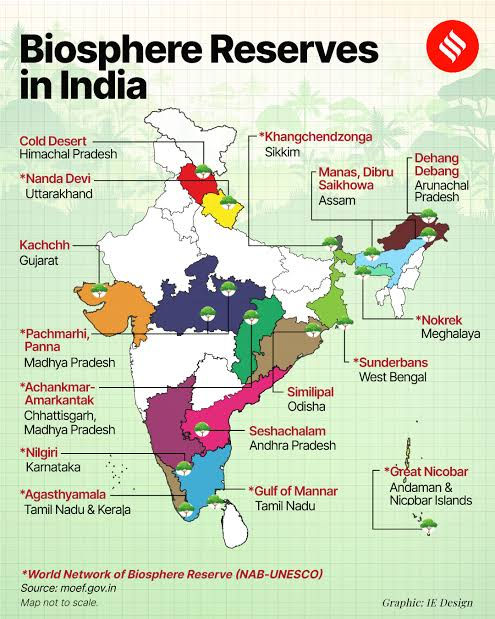
Importance of Biosphere Reserves
Biodiversity Conservation: Biosphere reserves are crucial in preserving endangered species, protecting habitats, and maintaining ecological processes.
Sustainable Development: These areas encourage practices that are environmentally sustainable and economically viable, fostering a harmonious relationship between people and their environment.
Climate Change Mitigation: By protecting ecosystems, biosphere reserves play a role in carbon sequestration, helping to mitigate the impacts of climate change.
Scientific Research: They serve as living laboratories for ecological research, providing valuable data on how ecosystems respond to human interventions and natural changes.
Goals of the International Day for Biosphere Reserves
The celebration emphasizes the need for:
Increased Awareness: Promoting the significance of biosphere reserves in environmental protection.
Community Engagement: Encouraging local and indigenous communities to take part in conservation efforts and adopt sustainable practices.
Policy Support: Advocating for stronger policies that support the protection of ecosystems and ensure the sustainable management of natural resources.
3.Typhoon Yagi: A typhoon is a type of tropical cyclone that occurs in the Northwest Pacific Ocean, particularly affecting East and Southeast Asia. Typhoons are similar to hurricanes and cyclones, differing only in their location.
In the Atlantic Ocean and Northeast Pacific, these storms are called hurricanes, while in the Indian Ocean and Southwest Pacific, they are referred to as cyclones.
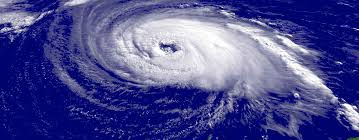
Key Characteristics of a Typhoon:
Formation: Typhoons form over warm ocean waters, typically at least 26.5°C (80°F), where low-pressure systems gather moisture and heat. They usually form between June and November, the peak typhoon season, though they can occur year-round.
Structure:
Eye: The calm center of the storm, typically with low pressure.
Eye Wall: The area surrounding the eye, where the strongest winds and heaviest rainfall occur.
Rainbands: Bands of rain and thunderstorms that spiral outward from the eye, bringing heavy precipitation.
Wind Speed: Typhoons are categorized based on their wind speeds. A typhoon must have sustained wind speeds of at least 74 mph (119 km/h) to be classified as such, with stronger storms termed super typhoons.
Typhoon Categories (Saffir-Simpson Scale):
Category 1: Wind speeds of 74–95 mph (119–153 km/h).
Category 2: Wind speeds of 96–110 mph (154–177 km/h).
Category 3: Wind speeds of 111–129 mph (178–208 km/h).
Category 4: Wind speeds of 130–156 mph (209–251 km/h).
Category 5: Wind speeds exceeding 157 mph (252 km/h).
Impacts of Typhoons:
Heavy Rainfall and Flooding: Typhoons bring torrential rains, often causing flash floods and landslides, especially in mountainous regions.
Strong Winds: These storms generate destructive winds, which can damage buildings, uproot trees, and disrupt power supplies.
Storm Surges: Coastal areas often experience storm surges, where rising sea levels and strong winds push water inland, leading to coastal flooding.
Economic and Human Losses: Typhoons can lead to significant loss of life, displacement, and economic damage, particularly in densely populated coastal areas.
Regions Affected:
East Asia: China, Japan, Taiwan, South Korea.
Southeast Asia: The Philippines, Vietnam, Thailand.
Western Pacific Islands: Guam, Micronesia.
Thanks For Visiting!!
Comments