


Today's Brief 31/08/2024
- Smriti IASxp

- Aug 31, 2024
- 7 min read
Youtube English: https://youtu.be/ZYDEISJzBCA?si=IivM9A9A17UlUPx5
Youtube Hindi:

Asna: An uncommon cyclone is about to shape over the Arabian Sea on Friday, according to the India Meteorological Department (IMD). The cyclone, named Asna, will be the first of its type in August given that 1976. It is anticipated to travel from the Saurashtra-Kutch location of Gujarat in the direction of the Oman coast.
Cyclones are intense circular storms that originate over warm tropical oceans.
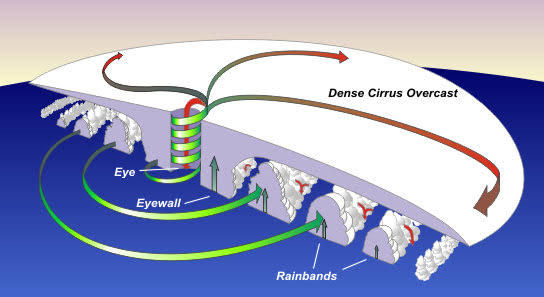
They are characterized by low atmospheric pressure, strong winds, and heavy rain. These systems are known by different names around the world: in the Atlantic and Northeast Pacific, they are called hurricanes; in the Northwest Pacific, typhoons; and in the South Pacific and Indian Ocean, cyclones.
Key Features of Cyclones:
Formation: Cyclones typically form over warm ocean waters near the equator, where the sea surface temperature is above 26.5°C (79.7°F). The warm water heats the air above, causing it to rise and create a low-pressure area. As the air rises, it cools and condenses, releasing heat and forming clouds. The Coriolis effect (caused by Earth's rotation) makes the storm spin, and the system begins to organize into a cyclonic shape.
Structure: A cyclone has a well-defined structure, with a central low-pressure area called the eye, surrounded by a wall of intense thunderstorms known as the eyewall. The eye is usually calm, while the eyewall is where the most severe weather occurs. Spiral rainbands extend outward from the eyewall, bringing heavy rain and wind.
Categories: Cyclones are classified into categories based on their wind speeds. The Saffir-Simpson Hurricane Wind Scale, for example, categorizes hurricanes from Category 1 (least severe) to Category 5 (most severe). A similar scale is used for cyclones in different regions.
Impact: Cyclones can cause widespread damage through strong winds, heavy rainfall, and storm surges. Flooding, landslides, and coastal erosion are common secondary effects. The severity of the impact depends on the cyclone's intensity, size, speed, and the area it hits.
Monitoring and Prediction: Meteorological agencies use satellite imagery, weather radar, and computer models to monitor and predict the path and intensity of cyclones. Early warnings and evacuation plans are crucial in minimizing loss of life and property.
Climate Change: There is ongoing research on the impact of climate change on cyclones. Warmer ocean temperatures and rising sea levels are likely to affect the frequency, intensity, and distribution of these storms in the future.
2.Why are we treated as sex workers: ITTING IN a café in Kochi, her tea untouched, Sivapriya Manisha opens up about what she went through. It’s not easy, and she is angry for the most part of the conversation. “Why are we treated as sex workers in this industry”?
A make-up artist in Malayalam films for 15 years, Manisha, who was trained in prosthetic make-up by National Award winning make-up artist Pattanam Rasheed, has temporarily changed gears and now does bridal make-up for a living. “I have very few film assignments now. With bridal make-up, at least no one is going to ask me to sleep with them,” she scoffs.
3.Maharashtra set to unveil India’s largest port project: The Vadavan Port project is anticipated to significantly enhance economic activity and open new pathways for international trade.
The port will be developed by Vadavan Port Project Limited (VVPL), a special purpose vehicle (SPV) created by Jawaharlal Nehru Port Authority (JNPA) and the Maharashtra Maritime Board (MMB).
The project represents a colossal investment of approximately ₹76,000 crore. Once completed, Vadavan Port will stand as one of the largest deep-water ports in India, featuring major infrastructure developments, terminals, and other commercial facilities under a public-private partnership (PPP) model.
The new port is expected to bolster India’s maritime connectivity and solidify its position as a global trade hub. It will be developed as a greenfield, deep-draft major port, capable of operating in all weather conditions.
The Vadavan Port is strategically located in Vadavan, Palghar district, which will further enhance the country’s trade capabilities.
4.NASA Discovers a Long-Sought Global Electric Field on Earth: A rocket team reports the first successful detection of Earth’s ambipolar electric field: a weak, planet-wide electric field as fundamental as Earth’s gravity and magnetic fields.

First hypothesized more than 60 years ago, the ambipolar electric field is a key driver of the “polar wind,” a steady outflow of charged particles into space that occurs above Earth’s poles.
This electric field lifts charged particles in our upper atmosphere to greater heights than they would otherwise reach and may have shaped our planet’s evolution in ways yet to be explored.
Using observations from a NASA suborbital rocket, an international team of scientists has, for the first time, successfully measured a planet-wide electric field thought to be as fundamental to Earth as its gravity and magnetic fields. Known as the ambipolar electric field, scientists first hypothesized over 60 years ago that it drove how our planet’s atmosphere can escape above Earth’s North and South Poles.
Measurements from the rocket, NASA’s Endurance mission, have confirmed the existence of the ambipolar field and quantified its strength, revealing its role in driving atmospheric escape and shaping our ionosphere — a layer of the upper atmosphere — more broadly.
Mission Endurance is a NASA-funded scientific mission that aimed to explore and measure a previously hypothesized but never-before-detected global electric field in Earth's upper atmosphere, known as the ambipolar electric field. This mission was significant for advancing our understanding of Earth's atmospheric dynamics and potentially those of other planets.
Key Aspects of Mission Endurance:
Objective:
The primary goal was to detect and measure the ambipolar electric field, a weak electric field that plays a crucial role in driving the "polar wind," a flow of charged particles from Earth's poles into space. This field was first hypothesized over 60 years ago, but had not been directly measured until this mission.
Importance of the Ambipolar Field:
The ambipolar electric field is fundamental to Earth, alongside gravity and magnetic fields. It helps lift charged particles in the upper atmosphere to higher altitudes, contributing to atmospheric escape and influencing the ionosphere's structure.
Understanding this field provides insight into the evolution of Earth's atmosphere and could help explain similar processes on other planets, such as Venus and Mars.
Launch and Execution:
The mission was conducted using a suborbital rocket launched from the Svalbard Rocket Range in the Arctic on May 11, 2022. This location was chosen because it is one of the few places where the polar wind can be directly observed.
The rocket, named Endurance, reached an altitude of 477.23 miles (768.03 kilometers) and collected data across a 322-mile range. The mission lasted approximately 19 minutes, with the rocket splashing down in the Greenland Sea.
Findings:
Endurance successfully detected the ambipolar electric field, measuring a change in electric potential of 0.55 volts, which is equivalent to the strength of a watch battery. Despite its weakness, this field exerts a force on hydrogen ions in the polar wind that is 10.6 times stronger than gravity, allowing these particles to escape into space at supersonic speeds.
The mission's findings indicate that the ambipolar field increases the scale height of the ionosphere by 271%, meaning that the ionosphere remains denser at greater altitudes than it would without the field.
The ambipolar electric field is a weak, planet-wide electric field that plays a crucial role in the dynamics of Earth's upper atmosphere. It is a fundamental force, much like gravity and magnetism, and has significant implications for how particles in the atmosphere behave, particularly in the polar regions.
Key Points About the Ambipolar Electric Field:
Nature of the Field:
The ambipolar electric field is generated in the upper atmosphere, where atoms and molecules are ionized by solar radiation, meaning they lose electrons and become charged particles (ions). This process creates a separation of charges—lightweight electrons tend to escape into space more easily, while heavier ions are pulled downward by gravity.
Bidirectional Force:
The field is termed "ambipolar" because it acts in both directions. As electrons try to escape upward, they create an electric field that pulls ions up with them. Conversely, as gravity pulls ions downward, it creates a field that drags electrons down too. This bidirectional nature keeps the electrons and ions somewhat together, preventing a complete separation of charges.
Role in Polar Wind:
The ambipolar electric field is a key driver of the "polar wind," a stream of charged particles flowing from Earth's atmosphere into space, particularly over the polar regions. This wind is composed of particles that have been lifted by the ambipolar field to higher altitudes where they can escape Earth's gravitational pull.
Impact on the Ionosphere:
The field helps maintain the structure of the ionosphere, a layer of the Earth's atmosphere filled with charged particles. By lifting ions to higher altitudes, the ambipolar electric field extends the height of the ionosphere, keeping it denser at greater altitudes than it would be otherwise.
Measurement and Detection:
The existence of the ambipolar electric field was hypothesized over 60 years ago, but it was only recently measured directly by NASA's Endurance mission. The mission detected a change in electric potential of 0.55 volts, confirming the presence and strength of this field. Despite being weak, this field has a significant impact on particle dynamics in the atmosphere.
Broader Implications:
The discovery and understanding of the ambipolar electric field provide insight into atmospheric escape mechanisms, not only on Earth but potentially on other planets as well. Similar fields may exist on planets like Venus and Mars, influencing their atmospheric evolution and the potential for habitability.

Importance in Planetary Science:
The ambipolar electric field is essential for understanding how Earth's atmosphere loses particles to space, which has implications for the long-term evolution of the atmosphere. Additionally, this concept can be applied to other planets, helping scientists understand atmospheric processes in different environments across the solar system.
5.UPI(Unified Payments interface): Surpassing the world’s leading digital payment platforms, India’s Unified Payments Interface (UPI) processed nearly 81 lakh crore rupees transactions in the April-July period this year, which is a staggering 37 per cent increase (year-on-year).
According to latest data by global payments hub Paysecure, UPI processed 3,729.1 transactions per second, which shows a 58 per cent surge over the 2,348 transactions every second registered in 2022- surpassing China’s Alipay, Paypal and Brazil’s PIX in the number of transactions.
Thanks For Visiting!!
Comments