


Today's Brief 28/09/2024
- Smriti IASxp

- Sep 28, 2024
- 4 min read
YouTube Analysis IE : https://youtu.be/7sgZsOgZNzI?si=nDDJrAlmEXWi5ZW7
YouTube Analysis JN: https://youtu.be/CL-OU6r9ixc?si=nKdZ60HT6qC6Lb2N
CAQM: stands for Commission for Air Quality Management. It is a statutory body established under the Commission for Air Quality Management in National Capital Region and Adjoining Areas, Act 2021.
Purpose: To enhance coordination, conduct research, identify and address issues related to air quality in the National Capital Region (NCR) and its neighboring regions.
Mandate: To prevent and control air pollution in the Delhi-NCR region.
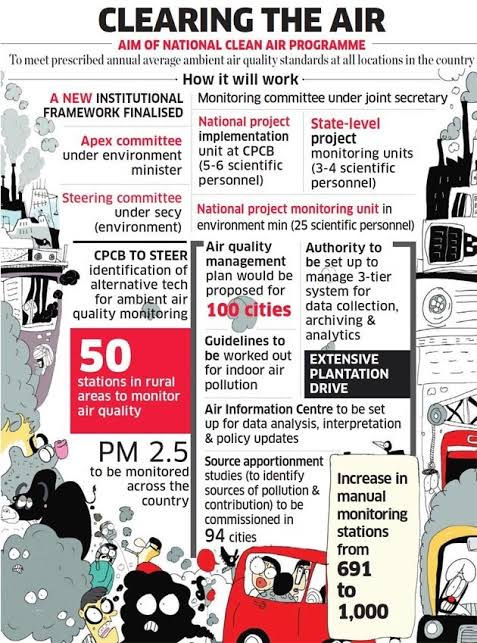
Functions:
Develop and implement comprehensive plans to improve air quality.
Monitor and assess air quality levels.
Take action to reduce pollution from various sources.
Coordinate with different stakeholders, including government agencies, industries, and the public.
It is a relatively new body established in 2021.
It plays a crucial role in addressing the severe air pollution problem in Delhi and its surrounding areas.
CAQM has been under scrutiny for its effectiveness in tackling stubble burning, a major contributor to air pollution during the winter season.
GRAP
GRAP is a comprehensive plan formulated by the Commission for Air Quality Management (CAQM) to address the severe air pollution crisis in the National Capital Region (NCR) of India.
It outlines various measures to be implemented based on the severity of air pollution levels.
The GRAP plan is divided into four stages:
Stage I (Severe Pollution): When the Air Quality Index (AQI) reaches the severe level, stringent measures are implemented, such as:
Restrictions on construction activities
Ban on diesel-powered generators
Increased frequency of mechanical sweeping of roads
Restrictions on vehicular movement
Closure of schools
Stage II (Very Poor): As the AQI deteriorates to very poor levels, additional restrictions are imposed, including:
Temporary closure of educational institutions
Restrictions on entry of trucks into Delhi
Increased frequency of mechanical road cleaning
Stage III (Poor): When the AQI falls in the poor category, measures such as:
Increased frequency of mechanical road cleaning
Restrictions on entry of certain types of vehicles into Delhi
Advisories to limit outdoor activities
Stage IV (Moderate): At moderate AQI levels, measures like:
Increased frequency of mechanical road cleaning
Public awareness campaigns
Key objectives of the GRAP plan:
To reduce air pollution levels in the NCR to safe limits.
To ensure public health and well-being.
To protect the environment.
Challenges and criticisms:
Enforcement: Effective implementation of the GRAP plan has been a challenge due to various factors, including lack of coordination among different agencies and public resistance.
Stubble Burning: Stubble burning in neighboring states remains a significant contributor to air pollution, making it difficult to achieve significant improvements in air quality.
Lack of Long-Term Solutions: While the GRAP plan provides short-term measures, there is a need for long-term solutions to address the root causes of air pollution.
Despite these challenges, the GRAP plan remains an important tool for addressing the air pollution crisis in the NCR. Continuous efforts are being made to improve its implementation and effectiveness.
The Air Quality Index (AQI) is a numerical value that indicates the quality of the air in a particular area.

It is calculated based on various pollutants, including:
Particulate matter (PM2.5 and PM10): Tiny particles suspended in the air.
Ground-level ozone: A harmful gas formed by the reaction of pollutants with sunlight.
Carbon monoxide: A colorless, odorless gas.
Nitrogen dioxide: A reddish-brown gas.
Sulfur dioxide: A colorless gas with a strong odor.
The AQI is categorized into different levels based on the concentration of these pollutants:
Good (0-50): Air quality is considered healthy.
Moderate (51-100): Air quality is acceptable, but sensitive individuals may experience health effects.
Unhealthy for Sensitive Groups (101-150): People with heart or lung diseases, the elderly, and children may experience health problems.
Unhealthy (151-200): Everyone may experience health effects.
Very Unhealthy (201-300): Everyone may experience serious health effects.
Hazardous (301-500): Everyone is at risk of serious health effects.
It is important to monitor the AQI in your area and take precautions to protect your health when air quality is poor. This may include staying indoors, limiting outdoor activities, and avoiding strenuous exercise.
2. Anti-Dumping Duty: A Protective Measure
Anti-dumping duty is a tax imposed by a country on imported goods sold at a price lower than their cost of production in the exporting country. This practice, known as dumping, can harm domestic industries by making imported goods artificially cheap.
Why is it needed?
Protection of Domestic Industries: It helps safeguard domestic producers from unfair competition, allowing them to operate profitably.

Fair Trade Practices: It promotes fair trade by preventing foreign producers from selling goods below cost to gain market share.
Job Preservation: By protecting domestic industries, anti-dumping duties can help preserve jobs and maintain economic stability.
China Shock
China Shock refers to the significant impact of China's rapid economic growth and increased exports on global markets, particularly in manufacturing sectors. This influx of low-cost Chinese goods has led to:
Job Losses: In industries that compete with Chinese imports, job losses have occurred due to lower production costs in China.

Price Pressure: The availability of cheaper Chinese products has put downward pressure on prices globally.
Restructuring of Industries: Many industries have had to restructure to remain competitive, often leading to changes in production methods and product offerings.
While China Shock has presented challenges for some industries, it has also created opportunities for others, such as those that can benefit from lower-cost inputs or those that can find niche markets not served by Chinese products.
Thanks For Visiting!!!
Comments