


Today's Brief 27/07/2024
- Smriti IASxp

- Jul 27, 2024
- 6 min read
Updated: Jul 28, 2024
Agritech: Modern technology has improved many aspects of agriculture, including efficiency, productivity, and environmental impact. Some examples of modern technologies used in agriculture include:

Agricultural drones These unmanned aerial vehicles (UAVs) or remotely piloted aircraft systems (RPAS) can help with tasks like crop monitoring, irrigation management, and pest and disease detection.
RFID technology Electronic tags can be attached to animals to monitor their location, movement, and health. Tags can also be attached to equipment to help prevent theft and misuse.
Light-emitting diodes (LEDs) These can provide a cheaper and better alternative to full-spectrum fluorescent lighting for indoor plant growth.
Minichromosome technology This technique uses genetic engineering to enhance the nutritional content and crop resistance traits of produce.
Precision agriculture techniques These techniques use data and technology to help farmers make more informed decisions, which can lead to better crop management and lower costs.
APMC : stands for Agricultural Produce Market Committee. It is a marketing board established by state governments in India to ensure that farmers are safeguarded from exploitation by large retailers, and that the agricultural produce is sold at fair prices.
Regulated Markets: APMCs operate regulated markets (mandis) where farmers can sell their produce. These markets are governed by state-specific Agricultural Produce Market Committee Acts.
Elimination of Middlemen: The objective is to eliminate middlemen and ensure farmers receive a better price for their produce. However, in practice, APMCs themselves have been criticized for perpetuating a different set of intermediaries.
Market Fees: Farmers have to pay a market fee to sell their produce in these mandis. The fee is used to maintain the market infrastructure.
Licensing: Traders, commission agents, and other market participants need to be licensed by the APMC to operate within the mandis.
Criticism and Reforms: APMCs have faced criticism for being monopolistic and not always benefiting the farmers as intended. There have been calls for reform to allow farmers to sell directly to private players, cooperatives, and online marketplaces.
Model APMC Act: The central government introduced the Model APMC Act in 2003 to encourage competition and investment in the agricultural sector. Many states have partially adopted this model.
Recent Reforms: In 2020, the Indian government passed the Farmers' Produce Trade and Commerce (Promotion and Facilitation) Act, which allows farmers to sell their produce outside APMC mandis without any state taxes or fees.

E-NAM: which stands for National Agriculture Market, is an online trading platform for agricultural commodities in India. It was launched by the Government of India in April 2016 to create a unified national market for agricultural produce by integrating existing APMC mandis through a virtual network.
Unified Market Platform: e-NAM aims to integrate all APMC markets across the country into a single online market, thereby creating a unified national market for agricultural commodities.
Transparency and Efficiency: The platform is designed to promote transparency in trading practices and ensure better price discovery for farmers. It reduces information asymmetry between buyers and sellers.
Inter-State Trading: e-NAM facilitates inter-state trading of agricultural produce, allowing farmers to access markets across state boundaries and get better prices for their products.
Online Payment: The platform supports online payment systems, ensuring quick and secure transactions between buyers and sellers. This reduces the need for physical cash transactions.
Quality Assurance: e-NAM provides quality certification of produce to ensure that buyers receive the produce of the specified quality. This helps in building trust among buyers and sellers.
Market Information: The platform offers real-time information on commodity prices, market trends, and supply-demand dynamics, helping farmers make informed decisions.
Integration of Mandis: Over 1,000 APMC mandis across various states have been integrated into the e-NAM platform, with more being added over time.
Farmer Empowerment: By enabling direct interaction between farmers and buyers, e-NAM aims to empower farmers by giving them more control over the sale of their produce and reducing their dependency on intermediaries.
Training and Support: The government provides training and support to farmers and other stakeholders to help them effectively use the e-NAM platform.
e-NAM is part of the broader effort to modernize the agricultural marketing system in India and improve the income of farmers by providing them with better access to markets and fairer prices for their produce.
2. Gaza Monestary in UNESCO List: The Saint Hilarion complex, one of the oldest monasteries in the Middle East, has been designated a UNESCO World Heritage site in danger due to the ongoing war in Gaza, according to a statement released on Friday.
UNESCO indicated that the site, which dates back to the fourth century, was added to the endangered list at the request of Palestinian authorities, citing "imminent threats" it faces.
Lazare Eloundou Assomo, director of the UNESCO World Heritage Centre, explained, "It's the only measure to protect the site from destruction in the current situation," referring to the conflict triggered by Hamas's attack on Israel on October 7.
In December, the UNESCO Committee for the Protection of Cultural Property in the Event of Armed Conflict decided to grant "provisional enhanced protection" — the highest level of immunity under the 1954 Hague Convention — to the site.
Previously, UNESCO had expressed concerns about the conservation of sites in Gaza even before October 7, due to inadequate heritage and culture protection policies.
The October 7 Hamas attack resulted in 1,197 fatalities in Israel, mostly civilians, according to an AFP tally based on official Israeli figures. In response, Israel's offensive against Hamas has caused at least 39,175 Palestinian deaths in Gaza, as reported by the territory's health ministry, which does not distinguish between civilian and militant casualties.

3.How the modern Olympics came to be: The inaugural Olympic Games kicked off in Athens, Greece on April 6, 1896, paving the way for modern sports competition as we know it. Most people recognise French baron Pierre de Coubertin as the “father of the modern Olympics” but the idea well predates him, going all the way back to 1830s Greece.
4. Paris Olympics: Manu Bhaker Qualifies For Final In Women’s 10 Metre Pistol: Ace India shooter Manu Bhaker finished third in the qualification round of Women’s 10 Metre Air Pistol to qualify for the final at the ongoing Paris Olympics on Saturday.
While Rhythm Sangwan failed to make her place in the final after finishing in 15th place.
Manu Bhaker displayed a stunning performance in the qualification round. In the first two series, Manu ended with 97 points. In the third series, the 22-year-old bagged 98 points. In the final three series, she sealed 96 points to finish in third place with a total of 580-27x.
5.NOvA (NuMI Off-axis νe Appearance) Experiment: is a prominent experiment in neutrino physics, designed to investigate the properties of neutrinos by studying their oscillations. Here’s an overview of the experiment:
NuMI Beam: The Neutrinos at the Main Injector (NuMI) beam at Fermilab produces a high-intensity beam of muon neutrinos (νμ). This beam is used in the NOvA experiment to study neutrino oscillations.
Off-axis Configuration: NOvA detectors are positioned off-axis relative to the main beamline. This setup allows the experiment to detect neutrinos at a different energy spectrum, optimizing the conditions to observe electron neutrino (νe) appearance.
νe Appearance: The primary focus of NOvA is to detect the appearance of electron neutrinos in a beam that was originally composed of muon neutrinos. This phenomenon is a key indicator of neutrino oscillations, where neutrinos change types or "flavors" as they travel.
Detector Setup: NOvA consists of two main detectors:
Near Detector: Located at Fermilab, it measures the initial composition of the neutrino beam close to its source.
Far Detector: Positioned 810 kilometers away in northern Minnesota, it detects the neutrinos after they have traveled a long distance, providing data on how many muon neutrinos have transformed into electron neutrinos.
Goals and Objectives: The NOvA experiment aims to:
Measure the rate of νe appearance to gain insights into the parameters governing neutrino oscillations.
Determine the neutrino mass hierarchy (i.e., the ordering of the neutrino masses).
Study the differences between neutrinos and antineutrinos, potentially providing insights into the matter-antimatter asymmetry in the universe.
Significance: The findings from NOvA contribute to our understanding of fundamental physics, including the properties of neutrinos and the mechanisms behind their oscillations. This research is vital for both the Standard Model of particle physics and potential new physics beyond it
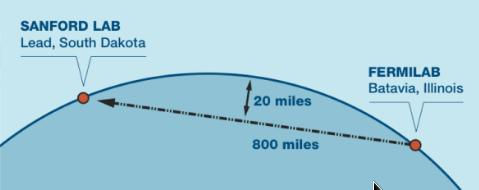
NOvA represents a significant step forward in neutrino research, offering valuable data that can help answer some of the most fundamental questions in physics.
Thanks For Visiting!!
Comments