


Today's Brief 20/09/2024
- Smriti IASxp

- Sep 20, 2024
- 2 min read
YouTube English IE: https://youtu.be/pmUoIVP_-4U?si=QQDtynB1KIgTTRLx
YouTube Hindi JN: https://youtu.be/f7gh9tDxFds?si=Ws2l3WWi_zy2Rcjy
1.The Indus Waters Treaty (IWT) (GS-2)- is a water-sharing agreement signed between India and Pakistan in 1960. It was brokered by the World Bank and outlines how the waters of the Indus River and its tributaries should be divided between the two countries.
The treaty is considered one of the most successful examples of dispute resolution and cooperation over shared water resources, even amid ongoing tensions between India and Pakistan.
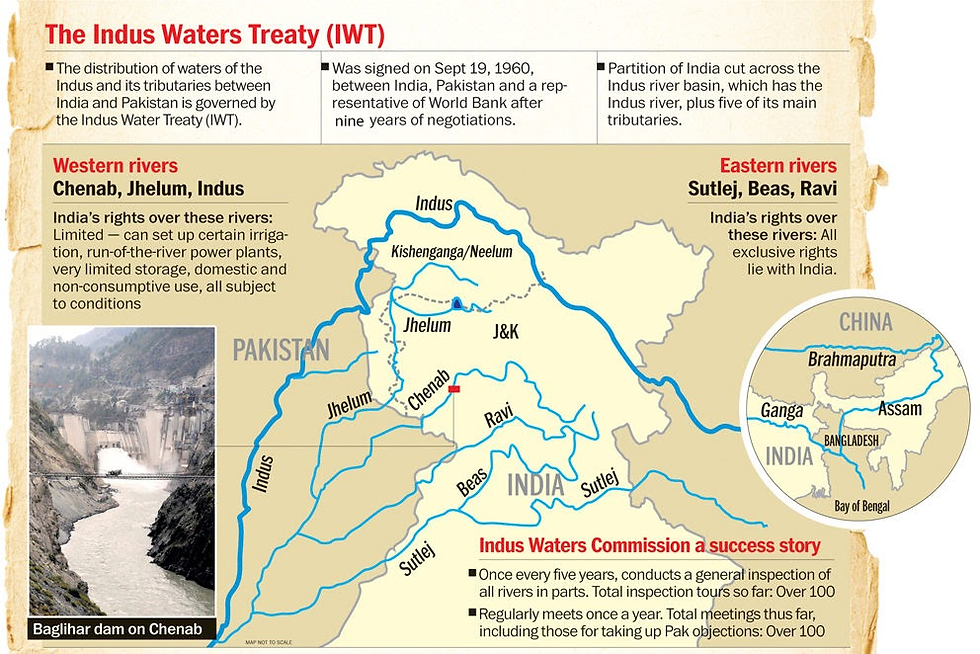
Key Features of the Indus Waters Treaty:
Division of Rivers:
The Indus River system has six major rivers: the Indus, Jhelum, Chenab, Ravi, Beas, and Sutlej.
The treaty divides the rivers into two groups:
Eastern Rivers (Ravi, Beas, and Sutlej):
Allocated to India for unrestricted use.
Western Rivers (Indus, Jhelum, and Chenab): Mostly allocated to Pakistan, but India is allowed limited use for irrigation, power generation, and other non-consumptive purposes.
Rights and Usage:
Pakistan receives about 80% of the water from the Indus system.
India has control over the Eastern Rivers and limited rights over the Western Rivers.
The treaty permits India to build hydropower projects on the Western Rivers under specific conditions.
Dispute Resolution:
The treaty establishes a Permanent Indus Commission, with representatives from both countries, to manage the treaty and resolve issues.
In case of disputes, the treaty outlines a multi-stage process involving bilateral talks, World Bank mediation, and the option of international arbitration.
Challenges and Conflicts:
While the treaty has endured over the years, there have been disagreements, especially over India's construction of dams on the Western Rivers.
Pakistan has raised concerns over projects like the Baglihar Dam and the Kishanganga Project, fearing they might reduce water flow into Pakistan.
India argues that these projects comply with the treaty, which allows limited non-consumptive use of water.
Sustainability Concerns:
Both countries face increasing pressure on water resources due to population growth, climate change, and agricultural demands.
There have been occasional calls for renegotiation or review of the treaty, especially from India, which has considered using its rights under the treaty more aggressively following tensions with Pakistan.
Despite the conflicts and challenges, the Indus Waters Treaty has largely been respected by both nations, making it a rare example of sustained cooperation
Indian Express Article: https://www.google.com/amp/s/indianexpress.com/article/research/why-india-and-pakistan-signed-the-indus-water-treaty-in-1960-9578348/lite/
2. US FED rate Cut : https://www.smritiias.in/post/federal-reserve-surprises-with-half-point-rate-cut-powell-defends-decision
3. PM-JI-VAN Yojana : The Ministry of Petroleum and Natural Gas has taken several key decisions during the first 100 days of the third term of the NDA government. Sources in the Ministry said that recently the government approved the modified l
Modified scheme will provide remunerative income to farmers for agro residue
Pradhan Mantri Jaiv Indhan Vatavaran Anukool Fasal Awashesh Nivaran (PM-JI-VAN) Yojana.
The scheme aims to provide remunerative income to farmers for their agricultural residue and address environmental pollution.
They added that with the amendments in the scheme, financial assistance is available for advanced biofuels, and preference will be given to new technologies and innovation in project proposals.

The scheme also helps create local employment opportunities and contributes to India’s energy security and self-reliance.
Thanks for visiting!!
Comments