


Today's Brief 11/08/2025
- Smriti IASxp

- Aug 11, 2025
- 2 min read
1. India’s S-400 Missile Systems & Operation Sindoor
(General Studies-III (250 marks)Technology, Economic Development, Biodiversity, Environment, Security, and Disaster Management)
India has received 3 out of 5 contracted S-400 air defence systems from Russia, stationed strategically near the Pakistan and China borders.

The remaining two are expected by 2025–26.
Other systems like the Barak-8 MRSAM and indigenous Akash missiles were also utilized under Operation Sindoor. The Defence Acquisition Council recently approved an annual maintenance contract for the S-400s.
2. Bhagirathi River Reroutes Following Flash Flood
(General Studies-III (250 marks)Technology, Economic Development, Biodiversity, Environment, Security, and Disaster Management)
A flash flood in Dharali, Uttarakhand caused a significant course change inthe Bhagirathi River, prompting the return of the Kheer Gad tributary to its original path, as confirmed by ISRO.

3. Government to Brief Tharoor-led Committee on India-US Ties
On Monday, August 11, 2025, the Indian government is set to brief the Parliamentary Standing Committee on External Affairs, led by MP Shashi Tharoor, focusing on the latest developments in India–US relations.
4 .World Sanskrit Day also known as Vishva-Samskrita-Dinam, is an annual observance dedicated to the promotion and revival of the Sanskrit language. It is celebrated on Shravana Purnima, the full moon day of the Hindu month of Shravana.

This date, which usually falls in August, also coincides with the festival of Raksha Bandhan
5 . NASA’s Artemis Program
(General Studies-III (250 marks)Technology, Economic Development, Biodiversity, Environment, Security, and Disaster Management)
advances with the successful test of the SLS rocket, aiming for a manned lunar mission by 2026.
NASA's Artemis program is a comprehensive and ambitious initiative designed to return humans to the Moon, with the ultimate goal of establishing a sustainable lunar presence and using it as a stepping stone for future missions to Mars.
The program's core objectives include landing the first woman and the first person of color on the Moon, thereby inspiring a new generation of explorers.
It aims to build a long-term base on the lunar surface and a small space station called Gateway in lunar orbit, which will enable continuous scientific research and technological development.
A key focus of the program is exploring the Moon's South Pole, a region believed to contain valuable water ice.
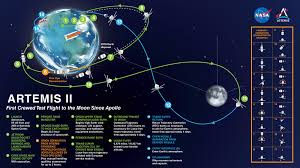
The Artemis program consists of a series of missions, starting with the successful uncrewed test flight of Artemis I in 2022.
This was followed by Artemis II, a planned crewed lunar flyby to test life support systems, and Artemis III, the mission that will see astronauts land on the lunar surface for the first time since the Apollo era.
Through a blend of international and commercial partnerships, the Artemis program is not only a symbol of space exploration but also a collaborative effort to shape the future of humanity's presence beyond Earth.
Comments